The Vexing Problem Of Lebanon
A Farewell To Arms?

The arid desert shall be glad,
The wilderness shall rejoice
And shall blossom like a rose
It shall blossom abundantly,
It shall also exult and shout.
It shall receive the glory of Lebanon.1
I dream of Lebanon by an azure sea;
Wave-kissed shores, and rocky glades;
Snowcaps on mountains, glistening gorgeously;
O sweet-scented pines’ serenades.2
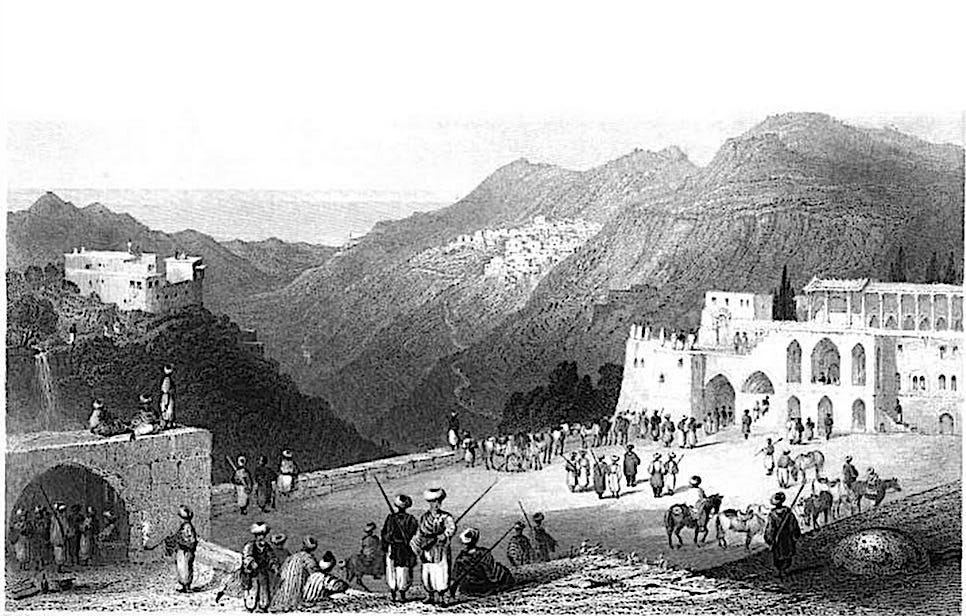
Proud Lebanon has been reduced and humbled. Once radiant in the Tyrian purple glow of its post-independence promise, it has long existed in a fallen state. That youthful afterglow has darkened to a scarlet hue, stained by the blood of civil war and political decay. Since the late 1960s, the country has been fractured—its southern region existing in a state of semi-independence, governed by forces outside the central authority. These internal divisions have made Lebanon a magnet for foreign intervention, each fragment pulling in the interests of regional and global powers.3
The Present Moment
Transitory moments in which she seemed poised to recapture her former promise have flickered by—but each has proven fleeting. Decades of turmoil and disappointment have left lamentable Lebanon not only diminished, but a shadow of the proud nation she once aspired to be. Now, in the aftermath of the latest Israel-Hezbollah war, she is provided with a period of opportunity to restore a greater measure of control in the long-neglected south.
The war left Hezbollah severely damaged. According to the Alma Research and Education Center, 15 percent of its operatives were casualties of the brief conflict and the senior leadership of the terrorist organization was seriously eroded. Its Radwan Unit, the sword of Hezbollah, which was tasked with invading the Galilee, was for the time being rendered out of commission.4
The Pledge And Plan
The government under its new president Joseph Aoun has pledged to disarm Hezbollah, the source of much vexation.5 Beirut has approved a plan to remove all non-governmental weapons from the south of the Litani River by the end of the year. However, various governmental officials walked out in protest over the decision to disarm. Hezbollah said that they will “treat this decision as if it does not exist.”6
One version of the disarmament plan called for Israeli withdrawal from five strategic positions in Lebanon in exchange. This withdrawal was set to occur from all positions before the Lebanese army disarmed Hezbollah’s heavy weaponry.7 Israel, for its part, recognized the importance of this development and announced that if the Lebanese army actually carried out “the necessary steps to implement the disarmament of Hezbollah” then they would reciprocate through “a phrased reduction of IDF presence” in southern Lebanon.8
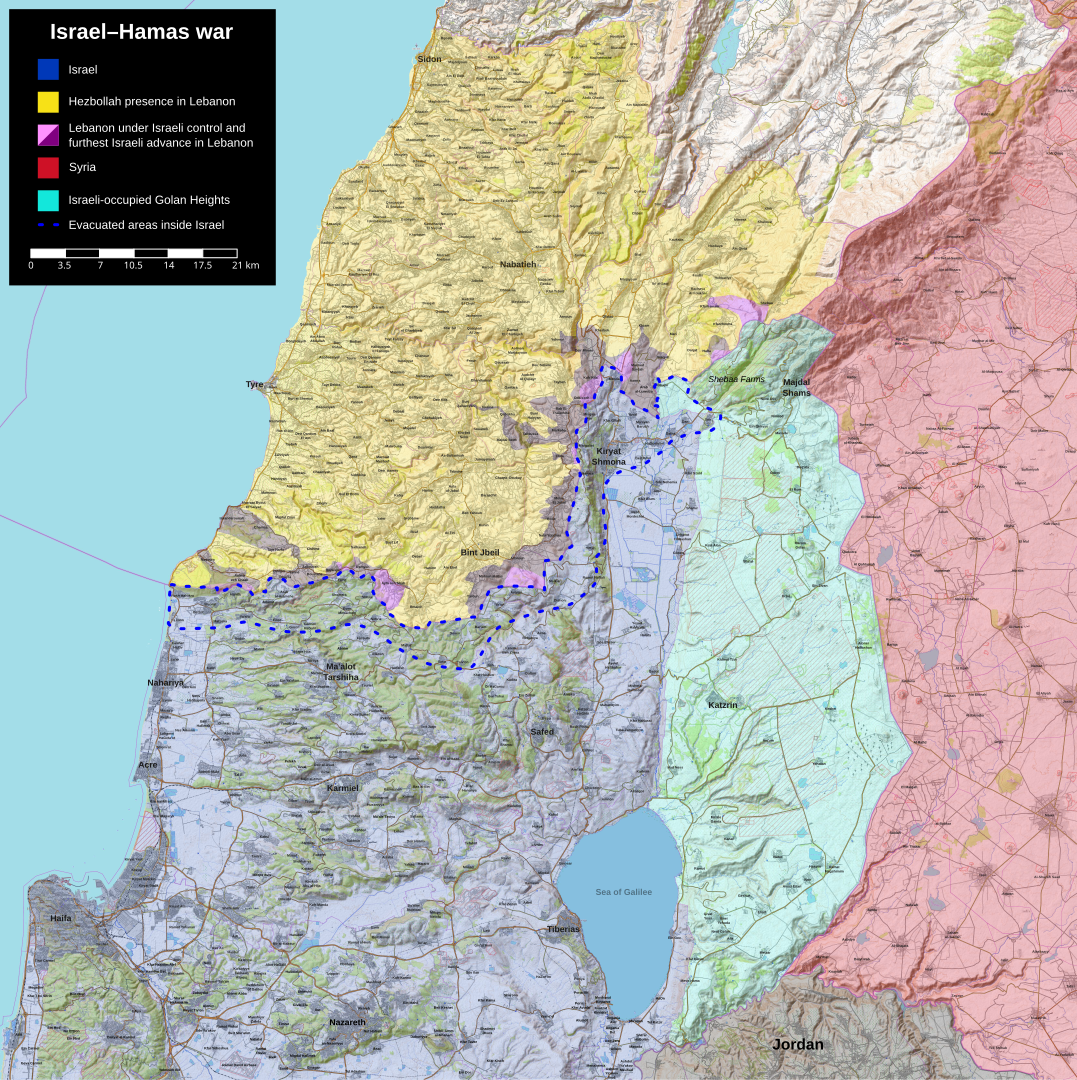
The talks have not remained entirely theoretical either. Back in early August, the Lebanese army suffered six fatalities when munitions at a Hezbollah arms depot detonated.9 The army also began disarming various Palestinian groups in refugee camps in the same area.10
Double Games
However, the effectiveness of these measures and the seriousness of the Lebanese government have been called into question. Critics point out that it is not entirely clear what disarmament means and how far the government is prepared to go to achieve it. Indeed, some critics go so far as to suggest much of the disarmament debate is smoke and mirrors:
So far, the Lebanese Armed Forces (LAF) have refrained from entering these areas in order to disarm Hezbollah in southern Lebanon. In addition, although the LAF reported last March that it had located approximately 500 weapons depots in southern Lebanon, very little evidence has been published in the media regarding the weapons found. It is unclear what weaponry was involved, and it appears that much of it is non-operational.11
A similar symbolic over substance charade was observed amid the fanfare of the army’s progress in disarming various Palestinian factions.12
The Alma Center also found evidence that suggested that elements within the Lebanese army were cooperating with Hezbollah to conceal weaponry.13 Hezbollah is not merely a state-within-a-state; it also functions as a deep state embedded within Lebanon’s institutions. It exists both within and alongside the Lebanese state. Therefore, any military disarmament that fails to address the legal, social, and economic structures sustaining Hezbollah’s shadow power structure will remain fundamentally incomplete.14
This would, however, involve a sweeping wave of reformation and disentanglement of state institutions from non-state actors. The widespread infiltration of institutions of the Lebanese such as the military’s intelligence apparatus by Hezbollah sympathizers and agents presents a formidable challenge.15 Hezbollah may be weakened but it is neither dead nor diaphanous. Prior to the war with Israel, Hezbollah was considered to be better armed than the Lebanese state.16 The war, though disastrous for the organization, is unlikely to have changed that balance.
Lebanon has been on this road many a time before. Pledges and plans to disarm the vestigial relics of its civil war era militias have been abundant. Hezbollah traditionally evaded this scrutiny. The 1989 Taif Agreement that ended the 15-year-long conflagration called for the Lebanese army to have full control over Lebanese territory and for the dismantling of “all Lebanese and non-Lebanese militias.”17 The same agreement also called for the liberation of southern Lebanon from Israeli occupation as part of its process of national re-coalescence.18
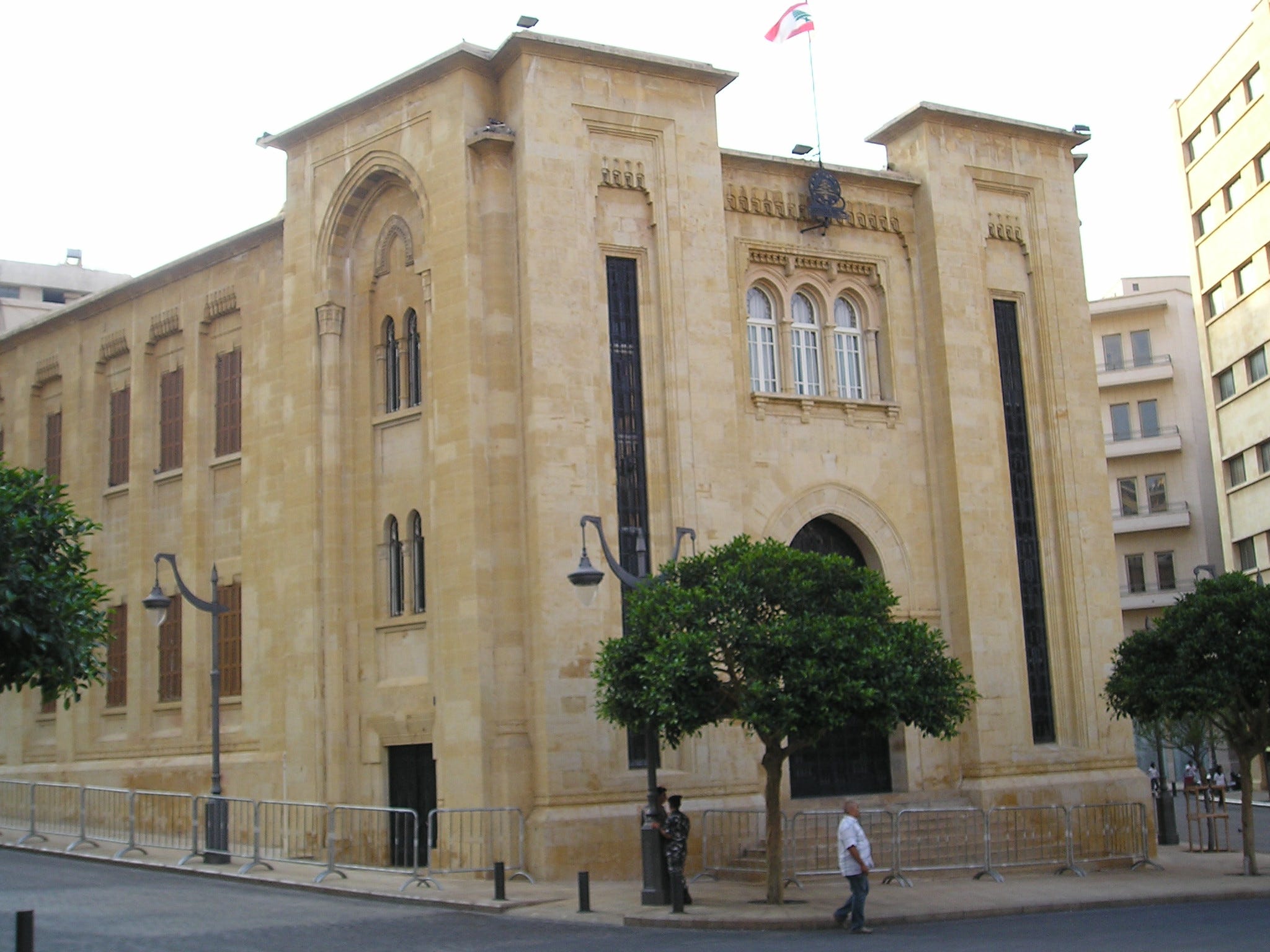
Hezbollah used the latter clause to exceptionally nullify calls for its own disarmament.19 In effect, they argued that their militia uniquely served a national purpose against a common enemy. The Israeli total withdrawal from southern Lebanon unsurprisingly revealed the hollowness of Hezbollah’s tepid attempt at a legal argument. The organization refused to disarm in the aftermath and shifted the goal to the liberation of Sheeba Farms20 from Israeli control.21 This too though was a hollow argument given that the organization’s ideological raison d’être from its inception was the utter elimination of Israel.22 The organization has never wavered from that belief.23 Still during this time, the Lebanese state failed to disarm Hezbollah.
The United Nations Security Council issued a resolution in 2004 reiterating a call for “the disbanding and disarmament of all Lebanese and non-Lebanese militias” within the country.24 The war between Israel and Hezbollah in 2006 only heightened international calls for a state monopoly of violence in Lebanon. The United Nations Security Council’s 1701 resolution denounced Hezbollah by name in its call for the “full implementation of the relevant provisions of the Taif Accords…that require the disarmament of all armed groups in Lebanon…other than that of the Lebanese State.”25
The international resolution tasked the United Nations Interim Force in Lebanon (UNIFIL) and the Lebanese government with carrying out this program. Both utterly failed to follow through. The Lebanese state, despite its promises, effectively abandoned any element of this program in 2008 after Hezbollah organized a military takeover of Beirut.26
The resolution’s status as a dead letter was evident to all. Indeed, a 2010 U.S. Senate hearing on Lebanon revealed the extent to which these resolutions and promises had become meaningless:
Just 4 years after its 34-day war with Israel, Hezbollah’s military capabilities today are more robust than ever. With the help of Iran and Syria, its arsenal has become more sophisticated and more lethal. During the 2006 conflict, Hezbollah fired approximately 4,000 rockets--4,000 rockets--into Israel, killing 44 Israeli citizens. Furthermore, it retains military superiority to Lebanon's armed forces. In April, Defense Secretary Gates said Hezbollah had, and I quote, “far more rockets and missiles than most governments in the world.”27
UNIFIL’s presence in southern Lebanon was no deterrent to Hezbollah activity. Quite the contrary, the latest Israeli operation in Lebanon showed that many Hezbollah positions were in close proximity to UNIFIL bases.28
A Path Forward
Jerusalem has reason to be skeptical of Lebanon’s renewed declarations to disarm Hezbollah. Decades of broken promises have eroded trust. While Israel may hope to see Beirut assert full control over its borders and bullets, it also knows that Lebanon’s political leadership remains fickle, fractured, and often captive to sectarian calculations. A premature withdrawal—absent real enforcement—risks repeating the cycles of backsliding witnessed in 2000 and 2006. In this view, continued external pressure remains the surest path toward realizing the long-delayed goal of a sovereign, unified Lebanese state.
As I have argued before, Lebanon must ultimately decide what kind of nation it wishes to be.29 To allow Hezbollah to operate as it has in the past is to provide provender for future war and bloodshed. If Lebanon is to escape the recurring tragedies of its history, it must not only reflect on its mistakes—it must at last move to rectify them.
Isaiah 35:1-2.
Saloomey, E.K. My Lebanon. Poets.org. Accessed September 22, 2025, from https://poets.org/poem/my-lebanon.
For a history of Lebanese politics, see Hulkower, I. (2025, May 8). Pity The Nation Revisited Part 1: A Lamentation Of Lebanese Politics. Substack. https://substack.com/home/post/p-163143511; Hulkower, I. (2025, May 15). Pity The Nation Revisited Part 2: Lebanese Conflagrations And A Hope. Substack. https://substack.com/home/post/p-163445194.
Beeri, T. (2025, May 21). Special Report: Is There a Historic Opportunity to Eliminate Hezbollah’s Military Power. Alma Research and Education Center. https://israel-alma.org/special-report-is-there-a-historic-opportunity-to-eliminate-hezbollahs-military-power/.
See footnote 98, Hulkower, I. (2025, May 15). Pity The Nation Revisited Part 2.
AFP and TOI. (2025, September 9). Lebanon says Hezbollah will be disarmed south of Litani within three months. The Times of Israel. https://www.timesofisrael.com/lebanon-says-hezbollah-will-be-disarmed-south-of-litani-within-months/.
Zehavi, S. (2025, August 12). The Decision of the Lebanese Government to Disarm Hezbollah Reality or Fantasy? Alma Research and Education Center. https://israel-alma.org/the-decision-of-the-lebanese-government-to-disarm-hezbollah-reality-or-fantasy/.
Prime Minister of Israel (2025, August 25). In light of this important development, Israel stands ready to support Lebanon. X. https://x.com/IsraeliPM/status/1959886055449976974.
Explosion at Lebanese arms depot kills 6 army experts, wounds several others. (2025, August 10). The Associated Press. https://apnews.com/article/lebanon-soldiers-killed-zibqin-arms-depot-hezbollah-israel-b7e8b68f7bad3b9010ffd60b59e4e79d.
Lebanon begins disarming Palestinian groups in refugee camps. (2025, August 21). Al Jazeera. https://www.aljazeera.com/news/2025/8/21/lebanon-begins-disarming-palestinian-groups-in-refugee-camps.
Zehavi, S. (2025, August 12). The Decision of the Lebanese Government.
Beeri, T. (2025, September 15). Palestinian Refugee Camps in Lebanon: “Disarmament.” Alma Research and Education Center. https://israel-alma.org/palestinians-refugee-camps-in-lebanon-disarmament/.
Zehavi, S. (2025, August 12). The Decision of the Lebanese Government.
Ibid.
Beeri, T. (2025, August 24). Hezbollah’s Infiltration into Lebanese Intelligence: Why the IDF Cannot Treat the Lebanese Army as Independent. Alma Research and Education Center. https://israel-alma.org/hezbollahs-infiltration-into-lebanese-intelligence-why-the-idf-cannot-treat-the-lebanese-army-as-independent/; Kleinman, S. (2025, March 4). Lebanese Army infiltrated by Hezbollah loyalists. JNS. https://www.jns.org/lebanese-army-infiltrated-by-hezbollah-loyalists/.
McFall, M.R. (2024, July 8). Hezbollah’s Military: How Does it Compare to Israel’s Forces. Newsweek. https://www.newsweek.com/hezbollah-military-compared-israel-idf-military-1922094.
The Taif Agreement. United Nations. Accessed September 22, 2025 from https://www.un.int/lebanon/sites/www.un.int/files/Lebanon/the_taif_agreement_english_version_.pdf.
Khatib, L. (2021). How Hezbollah holds sway over the Lebanese state. Chatham House. https://www.chathamhouse.org/2021/06/how-hezbollah-holds-sway-over-lebanese-state/05-influence-over-military-and-security.
The Taif Agreement.
This is territory Israel conquered from Syria in 1967. In doing so, it inherited an ongoing dispute with Lebanon over the territory’s status.
Ibid.
See the section labelled “The Necessity of the Destruction of Israel.” The Hizballah Program: An Open Letter. International Institute for Counter-Terrorism. Accessed September 22, 2025 from https://www.ict.org.il/UserFiles/The%20Hizballah%20Program%20-%20An%20Open%20Letter.pdf.
Hezbollah Sides with Resistance Seeking ‘Full Liberation’ of Palestine, Official Says. (2017, May 2). Tasnim New Agency. https://www.tasnimnews.com/en/news/2017/05/02/1396036/hezbollah-sides-with-resistance-seeking-full-liberation-of-palestine-official-says.
See UNSC Resolution 1559. https://docs.un.org/en/S/RES/1559(2004).
See UNSC Resolution 1701. https://unsco.unmissions.org/sites/default/files/s_res_17012006.pdf.
Khatib, L. (2021). How Hezbollah holds sway.
Assessing The Strength Of Hezbollah: Hearing Before The Subcommittee On Near Eastern And South And Central Asian Affairs Of The Committee On Foreign Relations. (2010, June 8). U.S. Senate, Government Publishing Office. https://www.govinfo.gov/content/pkg/CHRG-111shrg62141/html/CHRG-111shrg62141.htm.
Alma Israel. (2024, October 15). IDF exposes a Hezbollah underground bunker, right by UN watchtower! [Video]. YouTube; Blanford, N. (2023, September 27). Hezbollah’s assertive posture in south Lebanon places UNIFIL in a difficult position. Atlantic Council. https://www.atlanticcouncil.org/blogs/menasource/hezbollahs-posture-unifil-israel/. HonestReporting. (2024, February 12). Hezbollah’s reconnaissance mission on the border [Video attached]. Facebook. https://www.facebook.com/watch/?v=714788140799791; Lafavor, L., Bowman, B., & McMillan, C. (2024, July 9). Analysis: A greatly expanded arsenal means this is not the Hezbollah of 2006. Long War Journal. https://www.longwarjournal.org/archives/2024/07/analysis-a-greatly-expanded-arsenal-means-this-is-not-the-hezbollah-of-2006.php; Zehavi, S. (2025, January 10). A Sobering Exhibition of Hezbollah’s Monstrous Arsenal. Alma Research and Education Center. https://israel-alma.org/a-sobering-exhibition-of-hezbollahs-monstrous-arsenal/; Zehavi, S. (2024, October 15). Does UNIFIL actually want Hezbollah out of southern Lebanon? Alma Research and Education Center. https://israel-alma.org/does-unifil-actually-want-hezbollah-out-of-southern-lebanon/.
See Hulkower, I. (2025, May 15). Pity the Nation Revisited Part 2. Substack.