Uneasy Lies the Pact
On Brothers, Cousins, and Strangers Amid an Emerging Middle East

My brother and I against my cousin, and my cousin and I against the stranger.1
A Ritual: False or True?
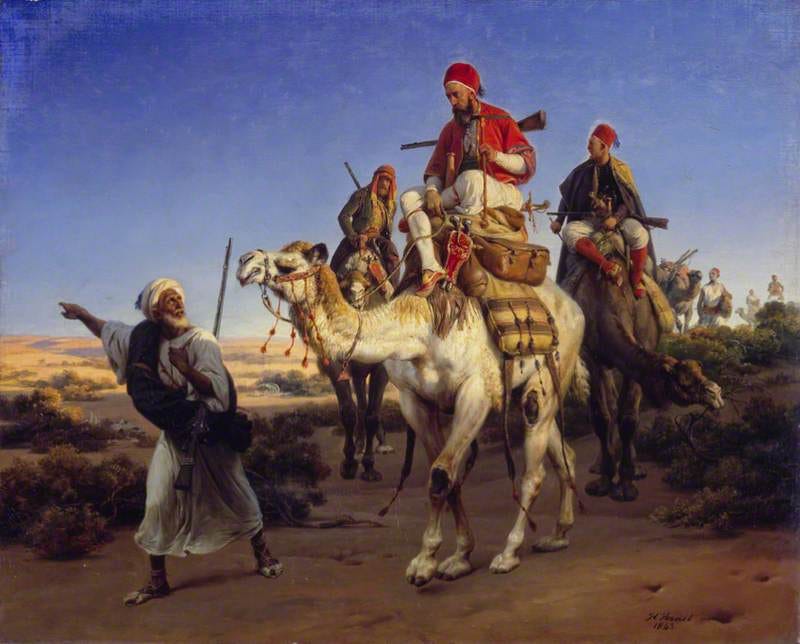
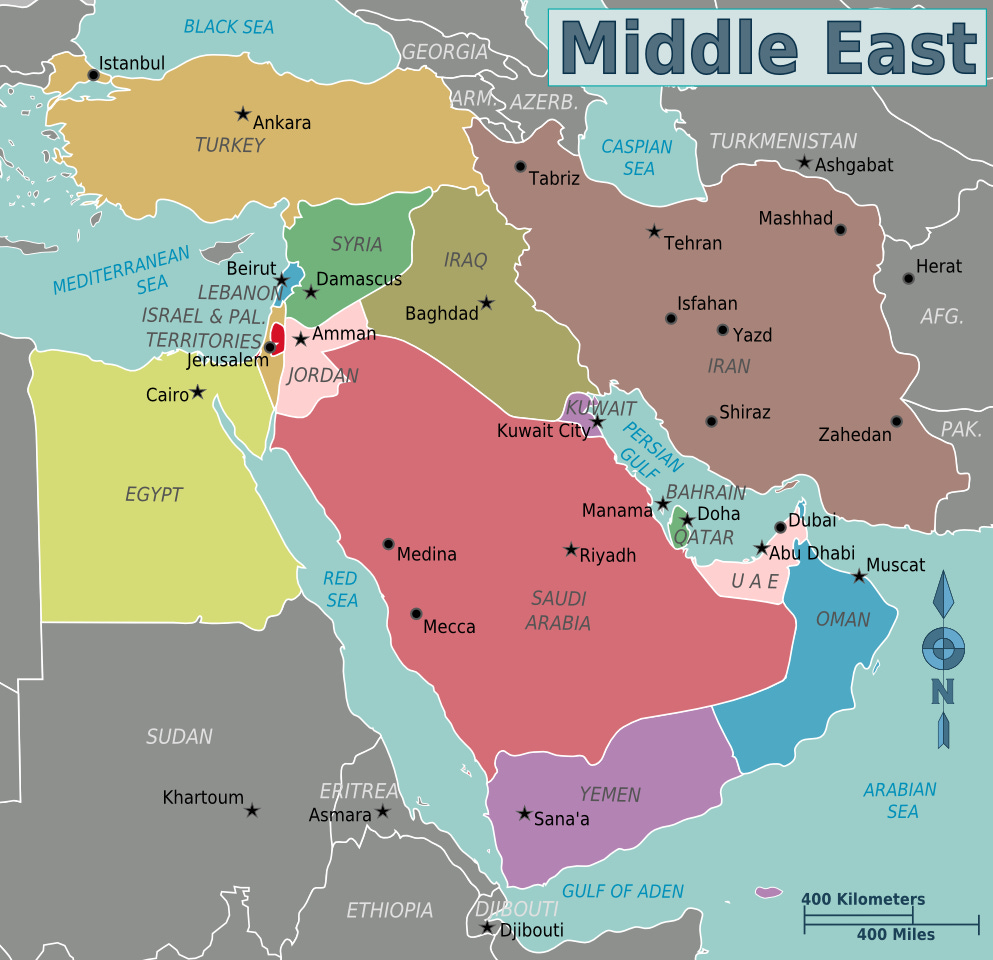
The ritual beckoned. It was, in many respects, a traditional ceremony. Proud smiles. A myriad of handshakes. The dawn of a historic day, with vows of friendship eternal. An agreement signed in Mecca, that most historic and sacred of Islamic sites, on Friday between the Saudis, Turks, and Pakistanis was heralded as a defensive pact.2 In another age this ritual would not be complete without the shedding of blood.
Yet it was not long ago that the Turks and Saudis were, if not foes, then distrustful rival centers of power in the Middle East. When the Saudis commenced their blockade of Qatar over its support for the Muslim Brotherhood and Islamist ideology, it was the Turks who expanded their presence in Qatar and sent a further contingent of troops to the small emirate.3 The Saudis and their allies demanded that the Turks leave.4 The demand went nowhere. Turkish ambitions for a neo-Ottoman vision of the Middle East, Qatar’s support for Turkey in the aftermath of the failed 2016 coup attempt, and their shared Islamist affinities proved too strong a pull to be overcome by the ire of the Saudis and their allies.5
The Middle East is a region riven by rivalrous powers, each vying for advantage over the other. Much blood has been shed over this feature of power politics. While the Saudis have long been close to the Pakistanis and even signed a formal defense agreement with that Islamic republic in 2025,6 the agreement with Turkey represents a historic expansion of what had previously been a privileged relationship. The signing of the pact comes amid the ongoing wreckage of the war against Iran. During the war, the Iranians—and now their proxies—have sent volley after volley of missiles against the Saudis, mainly claiming to target American military installations in the kingdom.7 The prolonged insecurity unleashed by the chaos of the war has raised questions about the value of American military assets in the Gulf. This, in turn, has encouraged these states to begin rebalancing their security arrangements in order to ensure their own survival.8
A New Protector?
The Saudis, then, are searching for a new arrangement. Perhaps, too, a new protector. Turkish Foreign Minister Hakan Fidan took pains to point out that the agreement included a clause equivalent to NATO’s Article 5, pledging the nations to collective security. In Fidan’s view, it represented the first stabilizing act in the region since the end of Ottoman rule. He also hinted that the pact was open to other powers joining it. “I have been discussing these issues continuously for exactly two years and eight months with our partners, with the partners with whom we signed the agreement, and with other countries in the region,” Fidan said. He disavowed the notion that the pact was directed against any one country.9
The Pakistanis were less diplomatic. Only a day had passed after the inking of the deal when the Pakistani defense minister denounced Israel as a threat to “the entire Muslim world” and declared the Jewish state’s creation in 1948, following the 1917 Balfour Declaration, illegitimate. The minister added that there ought to be “a united military front” against the vaunted Zionist foe.10
There is an irony in a Pakistani minister denouncing Israel’s origins as an illegitimate product of British imperialism while speaking on behalf of a state whose own creation was deeply entangled with the British partition of India. Indeed, the partition of India and creation of Pakistan led toward a much more violent process than the one surrounding Israel’s birth. Such ironies and hypocrisies abound in the Middle East, where the legitimacy of one state’s origins is often judged according to standards that are conveniently withheld from another.
More importantly, Pakistan’s rhetoric sits somewhat awkwardly alongside the strategic circumstances in which this pact was born. Pakistan maintains close relations with Iran even as Iranian forces and their proxies have been attacking one of the pact’s signatories, Saudi Arabia. The new alliance contains within it not only a commonality of interests but competing ones.
Hedging Against Uncertainty
The defensive pact has nevertheless garnered considerable attention in Israel. Dr. Yoel Guzansky, head of the Gulf Research Field at the Institute for National Security Studies (INSS), expressed concern that the alliance was a sign of waning American regional influence and an example of hedging behavior. Israeli conduct that contributed to the perception that Israel was seeking to become a “hegemon” and was embroiling itself and the region in “endless wars,” Guzansky argued, did not serve Saudi interests. Nor did the fact that the pact involved two countries with deeply rooted anti-Israeli attitudes escape him; the agreement, he noted, further complicated efforts at normalization between Israel and its neighbors. Guzansky likewise doubted that the pact itself would accomplish much beyond serving as a diplomatic statement, given that neither the Pakistanis nor the Turks desired to join the war against Iran.11
The Ghosts of Earlier Pacts
Grand ideological projects tend not to last long in the Middle East. They are often swallowed up by the arid desert, their thirst for permanence left unquenched. The political union between Egypt and Syria into the United Arab Republic, formed in 1958, collapsed in 1971. Other attempts, such as the United Arab States, the Federation of Arab Republics, and the Arab Islamic Republic, either failed to get off the ground or proved similarly short-lived. The Middle East Treaty Organization—better known as the Baghdad Pact and later CENTO—which brought together Turkey, Pakistan, Iran, Iraq, and the United Kingdom in the 1950s, was dysfunctional almost from the start12 and was later described as “the least successful of the Cold War schemes engendered by the Anglo-American alliance.”13
The lesson of these earlier experiments is not necessarily that alliances in the Middle East are doomed. States have genuine and enduring security interests, and those interests can produce remarkably durable partnerships. The lesson is rather that the rhetoric surrounding such arrangements should not be confused with the interests that sustain them.
The Desert Remains
The Mecca pact therefore deserves neither immediate celebration nor immediate dismissal. It should instead be understood as what it most clearly is: a sign of strategic uncertainty. Saudi Arabia is looking for greater freedom of maneuver. Turkey sees an opportunity to enlarge its regional role. Pakistan seeks to preserve its ties with Riyadh while projecting its own conception of Muslim solidarity. And all three are operating in a Middle East whose previous assumptions about American protection, Iranian power, and regional order have been shaken by war.
The pact may endure. It may expand. It may eventually become the nucleus of something more substantial. But the history of the region counsels caution. Alliances born amid uncertainty are often strongest when the threat is immediate and weakest when the threat recedes.
And somewhere beyond the ceremony, beyond the speeches and the flags and the signatures, the desert will remain. The desert remembers none of them. It has seen brothers turn against brothers, cousins against cousins, and strangers become brothers for a season. Then the wind comes. And the lines are erased. And the game begins again. Such are the affairs of men and nations.
An old Bedouin proverb.
Soylu, R. (2026, August 7). Turkey, Saudi Arabia and Pakistan sign defence pact, sources say. Middle East Eye. https://www.middleeasteye.net/news/turkey-saudi-arabia-pakistan-sign-defence-pact-sources-say.
The history of this regional crisis that broke out in 2017 is captured in Bakr, A. (2024, October 23). Turkey boosts military footprint in Qatar in shadow of Trump’s potential return. Amwaj.com. https://amwaj.media/en/article/turkey-boosts-military-footprint-in-qatar-in-shadow-of-trump-s-potential-return.
Schreck, A. & Lederman, J. (2017, June 23). Turkey to keep Qatar military base despite Arab nations’ demands. Associated Press. https://www.csmonitor.com/World/Middle-East/2017/0623/Turkey-to-keep-Qatar-military-base-despite-Arab-nations-demands.
On this aspect of the relationship, see Battaloglu, N. H. (2021). Ideational Factors in Turkey’s Alignment with Qatar and Their Impact on Regional Security. The International Spectator, 56(4), 101–118. https://doi.org/10.1080/03932729.2021.1994181.
On the military cooperation between the Saudis and Pakistanis, see Nawaz, N. (2025, November 4). From Historic Ties to Strategic Pact: Understanding the Pakistan-Saudi Defense Agreement. Center for International Strategic Studies. https://ciss.org.pk/from-historic-ties-to-strategic-pact-understanding-the-pakistan-saudi-defense/.
Sukri, A. (2026, August 9). Saudi Aramco extinguishes refinery fire; Houthis claim attack. CNBC. https://www.cnbc.com/2026/08/09/saudi-aramco-extinguishes-refinery-fire-houthis-claim-attack.html; Amnesty International. (2026, June 18). Iran: Deadly drone strikes on Bahrain and Saudi Arabia may constitute war crimes – new research. https://www.amnesty.org/en/latest/news/2026/06/iran-deadly-drone-strikes-on-bahrain-and-saudi-arabia-may-constitute-war-crimes-new-research/; Mizzi, O. (2026, August 5). Fifth of Iranian attacks on Gulf target non-military facilities. The New Arab. https://www.newarab.com/news/fifth-iranian-attacks-gulf-target-non-military-facilities.
Hulkower, I. (2026, June 21). Judgement Day: An Assessment of the Hormuz Crisis. Substack.

; Alexander, K. (2026, June 1). U.S. Bases in the GCC: A Security Model Under Attack. Middle East Council on Global Affairs. https://mecouncil.org/blog_posts/u-s-bases-in-the-gcc-a-security-model-under-attack/
Demir, G.N. & Solmaz, F.Z. (2026, August 9). Mecca Join Defense Agreement does not target any country: Turkish foreign minister says. Anadolu Agency. https://www.aa.com.tr/en/turkiye/mecca-joint-defense-agreement-does-not-target-any-country-turkish-foreign-minister/4022116.
Times of Israel staff. (2026, August 8). Pakistan’s defense minister threatens ‘illegitimate’ Israel after inking pact with Saudis, Turkey. https://www.timesofisrael.com/pakistans-defense-minister-threatens-illegitimate-israel-after-inking-pact-with-saudis-turkey/.
Greyman-Kennard, D. (2026, August 9). Turkey, Saudi, Pakistan defense pact complicates Israel normalization hopes, expert tells ‘Post.’ The Jerusalem Post. https://www.jpost.com/middle-east/article-904957.
An Iraq coup in 1958 led toward Baghdad withdrawing from the alliance, see Göktepe, G. (1999). The “Forgotten Alliance”? Anglo-Turkish Relations and CENTO, 1959-65. Middle Eastern Studies, 35(4), 103–129. http://www.jstor.org/stable/4284041. On the end of the organization, see Dimitrakis, P. (2009). British Diplomacy and the Decline of CENTO. Comparative Strategy, 28(4), 317–331. https://doi.org/10.1080/01495930903185336.
Martin, Kevin W. (2008). “Baghdad Pact”. In Ruud van Dijk; et al. (eds.). Encyclopedia of the Cold War. New York: Routledge. p. 57. ISBN 978-0-415-97515-5.